MIBR.LOS vs LYON Game 2 Draft Analysis: Global Pressure Meets Explosive Engage
A detailed League of Legends draft analysis for MIBR.LOS vs LYON at Esports World Cup Game 2, breaking down compositions, key picks, draft edge and prediction.
 Mibr.los
@128px.webp)

 TOP
TOP



 JGL
JGL


 MID
MID



 BOT
BOT


 SUP
SUP

Compositions
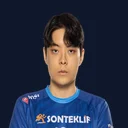
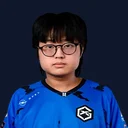
MIBR.LOS drafted a composition built around global pressure, reliable engage, and long-range pick potential. Zest’s Twisted Fate gives the blue side a constant threat of Destiny-enabled roams, while Duduhh’s Anivia and Feisty’s Syndra provide exceptional control over chokes, objectives, and mid-game terrain. Curse on Jarvan IV is the central initiator: Cataclysm can isolate a priority target and create perfect setups for Anivia’s wall and ultimate or Syndra’s burst.
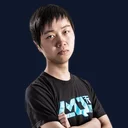
Ackerman’s Rell strengthens that engage identity. With Jarvan IV and Rell able to start fights from different angles, MIBR.LOS can force LYON into cramped spaces where Anivia excels. The composition is not especially fast at taking early structures, but it becomes extremely dangerous around dragon pits, Baron setups, and vision traps.
LYON answered with a more volatile skirmish-and-scaling composition. Inspired’s Qiyana is the largest early-playmaking threat on the Rift, particularly when paired with Isles’ Nautilus. Saint’s Ryze offers strong wave management and late-game side-lane pressure, while Dhokla’s Gnar can provide either frontline durability or a game-changing Mega Gnar engage.
Berserker’s Jhin gives LYON pick range and follow-up damage rather than sustained front-to-back carry power. This draft wants to create uneven fights: Qiyana finds an angle, Nautilus locks someone down, and Jhin finishes targets from outside MIBR.LOS’ threat range.
Key Picks
Anivia is the defining control pick for MIBR.LOS. LYON’s champions want mobility and access to flanks, but Anivia can deny those routes with Crystallize and punish narrow entrances with Glacial Storm. If MIBR.LOS reaches an organized objective setup first, LYON will struggle to move through the river safely.
Twisted Fate is equally important because he can expose Ryze’s side-lane plans. Ryze normally creates pressure by pushing a lane and moving first, but Destiny can turn that matchup into a numbers advantage for MIBR.LOS. Zest does not need to win a pure split-push; he needs to make every LYON overextension punishable.
For LYON, Qiyana is the highest-ceiling pick on the draft. Inspired can bypass the slower front line and threaten Feisty or Duduhh directly. A clean Supreme Display from a river wall can instantly reverse a supposedly favorable objective fight.
Draft Edge
MIBR.LOS hold the clearer teamfight structure. Their engage is dependable, their follow-up is obvious, and Anivia gives them a major advantage when fights happen on their terms. Jarvan IV, Rell, Syndra, and Anivia all punish LYON for entering predictable corridors.
LYON have more explosive individual playmaking, but their execution burden is higher. Qiyana needs flanks, Gnar needs Rage management, and Jhin requires protected firing lanes. Nautilus can start fights, yet a direct engage into MIBR.LOS may simply trap LYON inside Anivia’s control zone.
The draft edge therefore belongs slightly to MIBR.LOS, especially if they maintain vision around major objectives and deny Inspired access to fog-of-war angles.
Prediction
MIBR.LOS should be favored in a controlled game. Their composition has stronger objective setup, better answers to side-lane pressure, and more consistent engage tools. LYON can win through an Inspired-led snowball or a decisive Qiyana-Gnar combo, but those windows are narrower than MIBR.LOS’ standard teamfight plan.
Prediction: MIBR.LOS win Game 2 through superior objective control and layered engage.