T1 vs Gen.G Game 2 Draft Analysis: Ryze-Jax Scaling vs Gen.G’s Varus-Anivia Control
T1 and Gen.G clash in Game 2 with T1’s Ryze-Jax scaling tested against Gen.G’s Varus, Anivia and Shen control draft.
 T1
T1
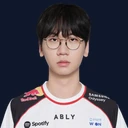

 TOP
TOP
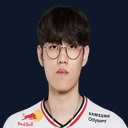

 JGL
JGL
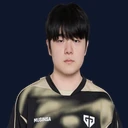
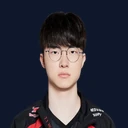

 MID
MID
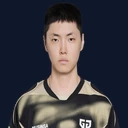
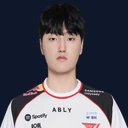

 BOT
BOT

 SUP
SUP
Compositions
T1 drafted a composition built around layered scaling, flexible side-lane pressure, and strong front-to-back fighting. Doran’s Jax and Faker’s Ryze give T1 two threats that become increasingly difficult to contain once items arrive. Ryze can accelerate rotations with Realm Warp, while Jax creates a split-push problem that demands respect from Gen.G’s slower carries.
The bottom side is equally important. Peyz’s Ezreal offers safe poke and mobility, and Keria’s Seraphine adds the shielding, sustain, and engage follow-up that lets T1 survive early pressure. Oner’s Xin Zhao is the bridge between these win conditions: he can gank for Jax, protect Ezreal from Vi, and use Crescent Guard to disrupt Gen.G’s long-range damage during objective fights.
Gen.G’s draft is more focused on zone control and pick conversion. Kiin’s Varus, Chovy’s Anivia, and Ruler’s Ziggs can make dragon and Baron entrances extremely painful. Anivia’s wall and ultimate restrict movement, Ziggs pokes towers and objectives from range, and Varus supplies both poke and dependable engage threat depending on his build. Canyon’s Vi gives the composition a direct way to start fights, while Duro’s Shen can reinforce sidelanes or protect a vulnerable carry with Stand United.
Key Picks
Faker’s Ryze is the pivotal T1 pick. Gen.G’s composition prefers opponents to walk into its terrain control, but Ryze can change the map state before that setup is complete. His Realm Warp gives T1 unusual angles into objectives and can turn Jax’s side-lane pressure into a sudden numbers advantage.
Keria’s Seraphine is also highly valuable into Gen.G’s engage tools. Vi wants a clean target access pattern, but Seraphine can counter-engage after Vi commits and keep T1’s carries alive through the initial burst. Her ultimate is especially threatening when Gen.G bunches around Anivia’s zone control.
For Gen.G, Chovy’s Anivia is the defining pick. T1 wants room for Jax and Ryze to flank or split the map, yet Anivia is excellent at delaying waves and trapping teams in narrow corridors. If Gen.G establishes vision first, Anivia can force T1 into an awkward engage through walls, storm, and Ziggs poke.
Draft Edge
T1 have the more adaptable draft because their threats operate in different lanes and at different ranges. Ezreal can contribute without committing, Ryze can roam, and Jax can split-push. That flexibility makes it difficult for Gen.G to choose whether Shen should answer Jax, cover Vi’s engage, or protect the artillery carries.
However, Gen.G own the cleaner objective setup. Their draft does not need to chase aggressively if they control vision around dragon or Baron. Anivia, Ziggs, and Varus can repeatedly poke T1 before Xin Zhao finds an engage window. Vi’s ultimate then gives Canyon a reliable trigger once a target is weakened or isolated.
The matchup may hinge on whether T1 can deny Gen.G’s first setup. If Oner reaches objectives early and Faker finds a Realm Warp flank, Gen.G’s immobile carries can be exposed. If Gen.G force T1 through chokepoints, their control tools should dictate every major fight.
Prediction
T1’s scaling and map flexibility give them a narrow draft advantage, but execution matters more than raw late-game power. T1 are favored if Jax gains side-lane tempo and Ryze can create proactive rotations. Gen.G will win through disciplined vision, poke, and Vi-led engage around objectives.
The expected game state is close early, with T1 becoming stronger as Jax and Ryze reach their key items. Still, Gen.G have enough siege and control to punish any rushed engage. Prediction: T1 win if they break Gen.G’s objective setup; otherwise, Gen.G’s zone control can take over the map.